Plan Your Visit Entrance Tickets and Prices in Uzbekistan for 2026. The best tips for tickets and tourist attractions in Samarkand, Bukhara and Khiva. This boot-shaped nation, which lies in Central Asia, is one of the most sought-after tourist destinations in the world, full of breathtaking scenery, cutting-edge fashion, passionate locals, and delicious food. Uzbekistan undoubtedly improves a traveler’s experience due to its stunning exterior as well as its gentle charm and harmonious blend of really outstanding civilizations.
Entrance Tickets and Prices in Uzbekistan
Samarkand
Gur Emir Mausoleum
- Address: Open in Google
- Opening hours: 9:00-19:00
- Entrance fee as follows:

The ticket price for Gur Emir Mausoleum is 75 000 Uzbek Som or about 5.86 US Dollars for every adult. The Gur Emir, one of the most important architectural groups of the medieval East, was constructed in the southwest of Samarkand at the start of the nineteenth century. This magnificent complex included a khanaka, the madrasah of Muhammad Sultan, Amir Timur’s grandson, and, later, the tombs of Amir Timur and his heirs.
Registan square
- Address: Open in Google
- Opening hours: 7:00-24:00
- Entrance fee as follows:

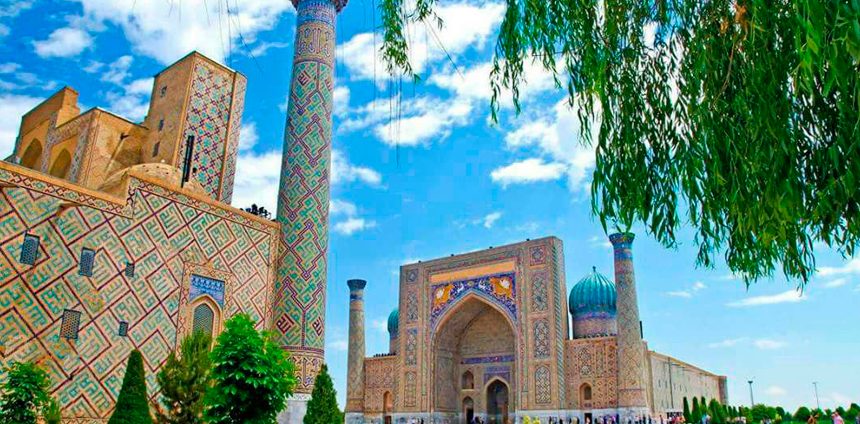
The ticket price for Registan square is 65 000 Uzbek Som or about 8 US Dollars for every adult. In the very heart of the ancient city of Samarkand there is a real pearl – Registan Square. This place gained worldwide fame thanks to its magnificent architectural complex, which has become a monument of oriental architecture. The square is surrounded on three sides by majestic madrassas, the portals of which face the center of the space.
Bibi Khanym Mosque
- Address: Open in Google
- Opening hours: 9:00-19:00
- Entrance fee as follows:

The ticket price for Bibi Khanym Mosque is 75 000 Uzbek Som or about 5.86 US Dollars for every adult. The unexpected sight is the Bibi-Khanym Mosque’s beautiful blue domes. The size and beauty of this monument are so impressive that it takes one’s breath away just to comprehend the scope of its construction. The dome of this mosque was likened to the Milky Way’s arch and the dome of heaven in antiquity.
Siyob Bazaar
- Address: Open in Google
- Opening hours: 9:00-19:00
- Entrance fee: Free

Siab Bazaar is the largest and oldest bazaar in Samarkand, one of the largest and oldest bazaars in Uzbekistan and Central Asia. The area of the bazaar exceeds seven hectares. Siab Bazaar is one of the most visited places in the city by tourists. The name of the bazaar comes from the name of one of the historical and geographical regions of the city – Siab, and the Siab River flowing near the bazaar. The word “Siab” is translated from Persian and Tajik as black water/river.
The Shah-i-Zinda Ensemble
- Address: Open in Google
- Opening hours: 9:00-19:00
- Entrance fee as follows:

The ticket price for The Shah-i-Zinda Ensemble is 75 000 Uzbek Som or about 5.86 US Dollars for every adult. One of Samarkand’s most enigmatic and distinctive architectural landmarks is the Shakhi Zinda complex, which is located next to the Bibi Khanum mosque. It is made up of rows of elegant tombs with glistening blue hues. Along the narrow medieval lanes, different mausoleums are grouped together in a harmonious composition that is both lively and energetic.
Ulugh Beg Observatory
- Address: One in Google
- Opening hours: 9:00-19:00
- Entrance fee as follows:

The ticket price for Ulugh Beg Observatory is 75 000 Uzbek Som or about 5.86 US Dollars for every adult. The Ulugh Beg Observatory is an observatory in modern day Samarkand, Uzbekistan, which was built in the 1420s by the Timurid astronomer Ulugh Beg.
Afrasiab Museum
- Address: Open in Google
- Opening hours: 9:00-19:00
- Entrance fee as follows:
The ticket price for Afrasiab Museum is 80 000 Uzbek Som or about 6.38 US Dollars for every adult. Museum building and the archaeological site are located in the north-eastern part of the city of Samarkand in the Central Asian country of Uzbekistan. It bears the name of Afrasiab, mythical king and hero of Turan. Permanent exhibition of the Afrasiab Museum of Samarkand is focused on the history of the city itself as well as the surrounding region.
Khoja Daniyor mausoleum
- Address: Open in Google
- Opening hours: 9:00-19:00
- Entrance fee as follows:
The ticket price for Khoja Daniyor mausoleum is 30 000 Uzbek Som or about 3.33 US Dollars for every adult. The mausoleum and complex of Khoja Doniyor are located in the northeastern part of the city of Samarkand, in the northeastern outskirts of the ancient settlement of Afrasiab, on a small hill, near the bank of the small river Siab
Rukhabad Mausoleum
- Address: Open in Google
- Opening hours: 9:00-19:00
- Entrance fee: Free
Rukhabod, is one of the earliest historic structures in Samarkand and one of the first structures built under Tamerlane’s (Timur) rule. It was constructed in 1380 on top of the t
Bukhara

The history of Bukhara stretches back millennia. Along with Samarkand, Bukhara was the epicentre of the Persian culture in medieval Asia until the fall of Timurid dynasty. Located on the Silk Road, the city has long been a center of trade, scholarship, culture, and religion. During the golden age of the Samanids.
Lyab-i-Hauz ensemble
- Address: Open in Google
- Opening hours: 24 hours
- Entrance fee:Free
The Lab-i Hauz survived because it is the centerpiece of a magnificent architectural ensemble, created during the 16th and 17th centuries, which has not been significantly changed since. The Lab-i Hauz ensemble, surrounding the pool on three sides. Lyabi hauz is a beatiful sight in Bukhara that comprises of a mosque, minaret and a pool that used to be one of the water sources
Nodir Devon Begi Madrasah
- Address: Open in Google
- Opening hours: 8:00-24:00
- Entrance fee as follows:
| Category | Fee (UZS) |
| Adult | 20 000 |

The ticket price for Nodir Devon Begi Madrasah is 20 000 Uzbek Som or about 1.54 US Dollars for every adult Nodir-Divan-Begi Madrasah is a madrasah in Bukhara, part of the Lyabi-Khauz architectural ensemble of the 16th-17th centuries. The madrasah was built in 1622-1623. the vizier of Imamkuli Khan, the Uzbek dignitary Nadir, Divan-begi as a caravanserai, but was later converted into a madrasah. In 1993, the madrasah, along with other monuments of the historical center of Bukhara, was included in the UNESCO World Heritage List.
Moschea Bolo-khauz
- Address: Open in Google
- Opening hours: 8:00-24:00
- Entrance fee: Free

The Bolo-Khauz Mosque was erected at the expense of the mother of the Uzbek ruler Abulfeyz Khan – Sitorai Mokhi-Khosa; Before the Revolution, it served as the main Friday mosque of Bukhara, and the Bukhara emir prayed in it. The winter mosque and house were built in 1712; the façade of the winter mosque was obscured by the painted ivan of the summer mosque on hypertrophied elongated columns. According to M. Yu. Saijonov, the ivan was repaired in 1917 In the same year, the architect Shirin Muradov built a minaret.
Ark of Bukhara
- Address: Open in Google
- Opening hours: 9:00-18:00
- Entrance fee as follows:
| Category | Fee (UZS) | Reserve ticket |
| Adult | 60 000 | BOOK NOW |

The ticket price for Nodir Devon Begi Madrasah is 60 000 Uzbek Som or about 4.62US Dollars for every adultThe Ark of Bukhara is a massive fortress located in the city of Bukhara, Uzbekistan, that was initially built and occupied around the 5th century AD. In addition to being a military structure, the Ark encompassed what was essentially a town that, during much of the fortress’s history, was inhabited by the various royal courts that held sway over the region surrounding Bukhara. The Ark was used as a fortress until it fell to Russia in 1920. Currently, the Ark is a tourist attraction and houses museums covering its history.
Maghak-i ‘Attari Mosque
- Address: Open in Google
- Opening hours: 9:00-18:00
- Entrance fee as follows:
| Category | Fee (UZS) | Reserve ticket |
| Adult | 20 000 | BOOK NOW |

The ticket price for Maghak-i ‘Attari Mosque is 20 000 Uzbek Som or about 1.54 US Dollars for every adultIt forms a part of the historical religious complex of Lyab-i Hauz. The mosque is located in the historical center of Bukhara, about 300 meters southwest of Po-i-Kalyan, 100 meters southwest of the Toqi Telpak Furushon trading dome and 100 meters east of Lab-i Hauz. It is a part of UNESCO World Heritage Site Historic Centre of Bukhara. Today, the mosque is used as a carpet museum.
Trading Domes
- Address: Open in Google
- Opening hours: 9:00-00:00
- Entrance fee: Free

Bukhara is famous across the world for its trading domes that march from Lyabi-Khauz to the Miri-Arab madrasah. Bukhara was the capital of the Shaybanides dynasty in the sixteenth century, which led to the city’s extraordinary expansion. Because it was situated on the Great Silk Road, the marketplaces and trading establishments were even more crowded intersections of public roadways. Since then, several centuries have gone by, and only four trading domes remain.
Chasma Ayub Mausoleum
- Address: Open in Google
- Opening hours: 9:00-20:00
- Entrance fee as follows:
| Category | Fee (UZS) |
| Adult | 20 000 |
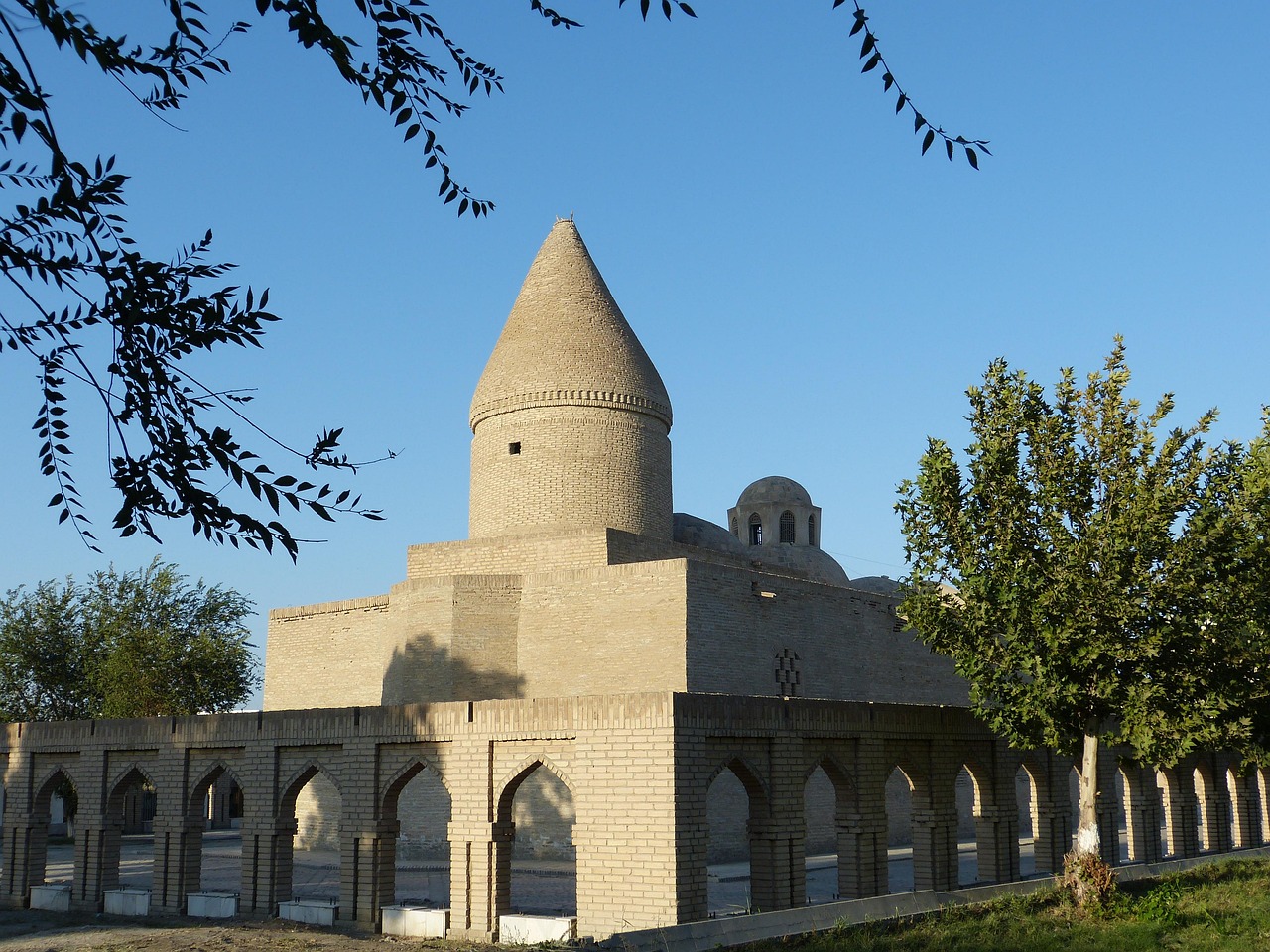
The ticket price for Chasma Ayub Mausoleum is 20 000 Uzbek Som or about 1.54 US Dollars for every adultIt Its name means Job’s well, due to the legend in which Job (Ayub) visited this place and made a well by striking the ground with his staff. The water of this well is still pure and is considered healing. The current building was constructed during the reign of Timur and features a Khwarazm-style conical dome uncommon in Bukhara.
Chor-Minor Madrasah
- Address: Open in Google
- Opening hours: 8:00-20:00
- Entrance fee: Free

Translated as Four Minarets is a one-story Central Asian madrasah in the historical center of Bukhara, built in the capital of the Bukhara Emirate, during the reign of the Uzbek ruler Haydar, at the expense of the Turkmen Khalifa Niyozkuli, imam-khatib of the largest mosque in the capital – the Kalyan Mosque.
Kalyan Mosque
- Address: Open in Google
- Opening hours: 8:00-20:00
- Entrance fee as follows:
| Category | Fee (UZS) |
| Adult | 20 000 |

The ticket price for Kalyan Mosque is 20 000 Uzbek Som or about 1.54 US Dollars for every adult. Dating back to the fourteenth century, the Kalyan Mosque is one of Bukhara’s most notable landmarks. Archaeological excavation data indicates that the old Karakhanid Djuma Mosque was disassembled and destroyed by fire, most likely during the Mongolian invasion. It was rebuilt after a while, however the new mosque did not last long. According to historical recorded records, a new mosque was constructed during the Sheybanid era in the fifteenth century.
Miri-Arab Madrasah
- Address: Open in Google
- Opening hours: 8:00-18:00
- Entrance fee: Free
The ticket price for Miri-Arab Madrasah is free. Mir Arab’s original name was Sayyid Abdullah, and when the emir was 22 years old, he came to Samarkand and became an apprentice to Khoja Ahror. In Sabroni (Savroni) of Turkestan, he dug 2 koriz (underground ditches), produced water, built a fortress, improved many places in Shafirkon, Vobkent, Gijduvan (now Mir Arab fortress is preserved in Shafirkon).
Ulugbek Madrasah
- Address: Open in Google
- Opening hours: 8:00-18:00
- Entrance fee as follows:
| Category | Fee (UZS) | Reserve ticket |
| Adult | 20 000 | BOOK NOW |
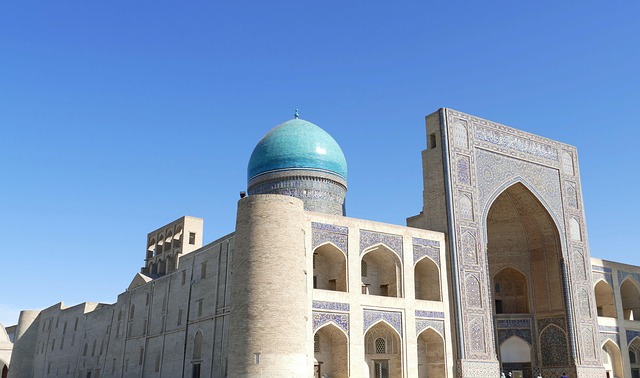
The ticket price for Ulugbek Madrasah is 20 000 Uzbek Som or about 1.54 US Dollars for every adultIt Ulugbek madrasah is an architectural monument in Bukhara and the oldest madrasa built by Ulugbek. During the reign of Abdullah Khan II, major renovation works were carried out. There is a majestic gable in the main style, 2-story rooms in 2 wings and flower bouquets in the corners. The top of the bouquets is dome shaped. The main decoration of the madrasah is on the gable, which uses colorful floral plaster and tiles in addition to glazed bricks.
Abdulaziz-Khan Madrasah
- Address: Open in Google
- Opening hours: 8:00-18:00
- Entrance fee as follows:
| Category | Fee (UZS) | Reserve ticket |
| Adult | 20 000 | BOOK NOW |
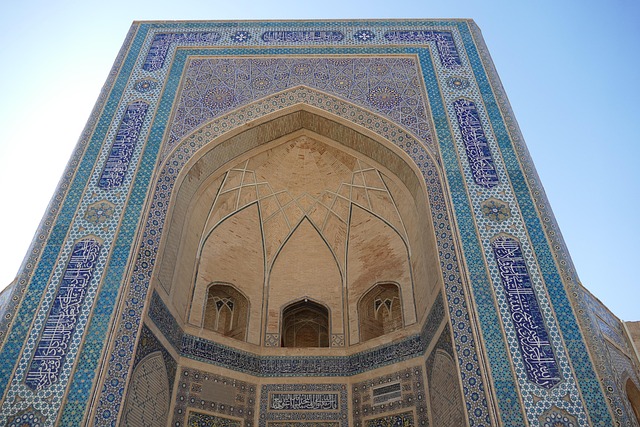
The ticket price for Abdulaziz-Khan Madrasah is 20 000 Uzbek Som or about 1.54 US Dollars for every adultIt The Abdulaziz-Khan Madrasah is an ancient madrassah in Bukhara, Uzbekistan. Like the entire historic part of the city, it is listed as a UNESCO world heritage site. It owes its name to its founder, Abdulaziz Khan (1614-1683) who had it built in 1652-1654. It is part of an architectural ensemble, forming a koch (double) with the Ulugbek Madrasah (1417), located to the east of the jewelers’ bazaar. Its exterior decoration is partly unfinished, because the Khan was dethroned while the decoration of the madrassah was not yet finished and the architect put an end to the project.
Ismail Samani
- Address: Open in Google
- Opening hours: 8:00-18:00
- Entrance fee: Free
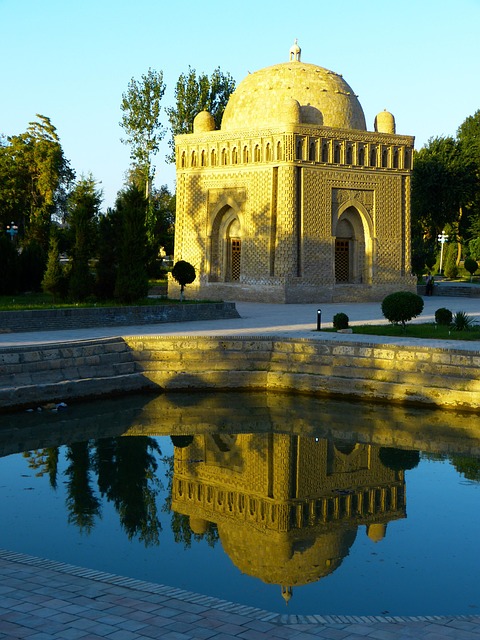
This mausoleum in Samani Park, Besides its beauty, the mausoleum is famous for being the oldest Islamic architectural monument in Central Asia.
Khiva

The old town retains more than 50 historic monuments and 250 old houses, dating primarily from the eighteenth or nineteenth centuries. Juma Mosque, for instance, was established in the tenth century and rebuilt from 1788 to 1789, although its celebrated hypostyle hall still retains 112 columns taken from ancient structures.
Notable buildings in Itchan Kala are Konya Ark, Juma Mosque, Ak Mosque, Hasanmurod Qushbegi mosque, madrasahs of Alla-Kulli-Khan, Muhammad Aminkhon, Muhammad Rakhimkhon, Mausoleums of Pahlavon Mahmoud, Sayid Allavuddin, Shergozikhon as well as caravanserais and markets.
Itchan Kala
- Address: Open in Google
- Opening hours: 9:00-21:00
- Entrance fee as follows:

Itchan Kala (Uzbek: Ichan-Qаl’а) is the walled inner town of the city of Khiva, Uzbekistan. Since 1990, it has been protected as a World Heritage Site.The old town retains more than 50 historic monuments and 250 old houses, dating primarily from the eighteenth or nineteenth centuries. Juma Mosque, for instance, was established in the tenth century and rebuilt from 1788 to 1789, although its celebrated hypostyle hall still retains 112 columns taken from ancient structures.
Notable buildings in Itchan Kala are Konya Ark, Juma Mosque, Ak Mosque, Hasanmurod Qushbegi mosque, madrasahs of Alla-Kulli-Khan, Muhammad Aminkhon, Muhammad Rakhimkhon, Mausoleums of Pahlavon Mahmoud, Sayid Allavuddin, Shergozikhon as well as caravanserais and markets.
Mukhammad Aminkhan Madrasah
- Address: Open in Google
- Opening hours: 9:00-21:00
- Entrance fee: under a single Itchan Kala ticket

Muhammad Aminkhan Madrasah is an architectural monument in Khiva (1852–1855). Built by Muhammad Amin Bahadur Khan. The Madrasah is located in the western part of the Itchan Kala. It was built in 1852–1855 with the funds and decree of the Uzbek ruler Muhammad Aminkhan. Muhammad Aminkhan Madrasah is the largest and most tiled in comparison to other Khiva madrasahs.
In 1990 it was included in the list of UNESCO World Heritage Sites as a part of Itchan Kala. Currently, it is used as a tourist service and exhibition space. Khiva tourist complex hotel is located there.
Mukhammad Rahimkhan Madrasah
- Address: Open in Google
- Opening hours: 9:00-21:00
- Entrance fee: under a single Itchan Kala ticket

The Muhammad Rahim Khan Madrasah is one of the largest in Khiva, and is located directly opposite the Konya Ark citadel. It has a size of 62 meters by 50 meters. It was built in 1871 on behalf of Khan Said Muhammad Rahim II (reign 1863 to 1910), who was also a well-known poet under the pseudonym Feruz Shah.
Kalta-Minor
- Address: Open in Google
- Opening hours: 9:00-21:00
- Entrance fee: under a single Itchan Kala ticket

Kalta-Minar (Uzb. Калта Минор) is a decorative minaret in Khive, located in the territory of the citadel of Ichan-Kala. Nakhoditsya sprava ot madrese Muhammad Amin-khana, i inogda schitaetsya ego chastyu.
Kunya-Ark, Juma Mosque
- Address: Open in Google
- Opening hours: 9:00-21:00
- Entrance fee: under a single Itchan Kala ticket

Arangakhan, the son of Anushakhan, constructed Kunya-Ark, or the “old castle,” in 1686–1688 around the end of the 17th century. The stronghold measures 130 by 93 meters in total. Mosques, a mint, the khan’s office, an official receiving hall, and numerous other outbuildings were all part of the citadel.
Tash-Khovli Palace
- Address: Open in Google
- Opening hours: 9:00-21:00
- Entrance fee: under a single Itchan Kala ticket
The palace of the ruler of Khiva, Allakuli Khan, Tash Khovli, was built in the 19th century. Initially, it contained 163 rooms and 3 courtyards: harem, mekhmonkhona (guest part) and arzkhona (courtroom).
It is known that the first harem was erected for the wife of the khan. In the southern part of the harem courtyard, small iwans were built for the ha-wife. The most richly decorated ivan served as a residential road for the khan. Each ivan of the harem is a masterpiece of Khivan applied art. Their walls, ceilings, columns are covered with unique ornamental patterns.
Pakhlavan Makhmud Mausoleum
- Address: Open in Google
- Opening hours: 9:00-21:00
- Entrance fee: 30 000 UZS

Palvan Pir, the kurash wrestler-saint; Pirar Vali, the antireligious Persian poet; Mahmoud, the district furrier; Pakhlavan Mahmoud (Pahlavon Mahmud), the Hercules of the East, and Palvan Pir all died here together in 1325, becoming the patron saint of Khiva and a legend in the area. Over time, a modest mausoleum developed on the location of Mahmoud’s first furrier shop. However, it wasn’t until 1810–1835 that the Kungrad khans of Khiva gave the tomb its current splendor, converting the shrine into the city’s most famous structure and the final great family mausoleum built in Central Asia.
Minaret of Islam-Khoja
- Address: Open in Google
- Opening hours: 9:00-21:00
- Entrance fee: under a single Itchan Kala ticket

This nearly contemporary complex was built at the start of the 20th century. It has a mosque and a minaret. The facility is named after Isfandiar Khan’s prime minister, Islam Khoja. The Khiva symbol is the Islam Khoja minaret.
Its upward narrowing is reminiscent of the earlier XIV-century architectural forms. On the minaret, bands of glazed designs alternate with the brickwork. The minaret is 56.6 meters high, and the foundation’s base has a diameter of 9.5 meters.
Book tickets and tours for all major Uzbekistan destinations and attractions.